Article | Oct 22. 2026 - 8:00AM
How authenticity, exports and function are reshaping color innovation in Asia Pacific
Color is no longer simply a finishing touch. It can help brands communicate a product’s heritage, prepare consumers for the experience ahead and support increasingly complex product-development strategies.

Author
Carel Soo
Head of Regional Marketing Deployment
When people discuss color trends in food and beverages, the conversation often begins with visual appeal. In Asia Pacific, where an eye-catching product can quickly attract attention online, presentation undoubtedly matters. But the most important developments in color today go beyond Instagrammability. They are connected to three broader forces: authenticity, export ambition and function.
Authenticity gives color greater meaning
Consumers may be drawn to novelty, but an unusual color becomes more compelling when it has an authentic story behind it.
Ube is a good example. Long established in the Philippines, it is becoming increasingly visible elsewhere in Southeast Asia. Its bright, bluish-purple appearance is instantly distinctive, but its appeal is not based on appearance alone. Ube also brings cultural heritage and a recognizable flavor identity.
Naturally sourced color solutions can help manufacturers translate these trends into practical applications. Jagua Blue, which Oterra uses to make Jungle Blue, can be blended with other natural colors to create vivid, stable green and purple shades. That makes it particularly relevant to brands exploring the bluish-purple territory associated with trends such as ube.
Exports are accelerating the transition
Many Asia Pacific manufacturers are no longer developing products only for their domestic markets. They are also considering consumers and regulatory requirements in the United States, the Middle East, Europe and elsewhere.
This changes the color conversation. Manufacturers want to reduce formulation and labelling complexity while creating products that can travel across markets. In many cases, the transition towards natural colors therefore begins with export-focused innovation and new product development rather than the immediate reformulation of every established product.
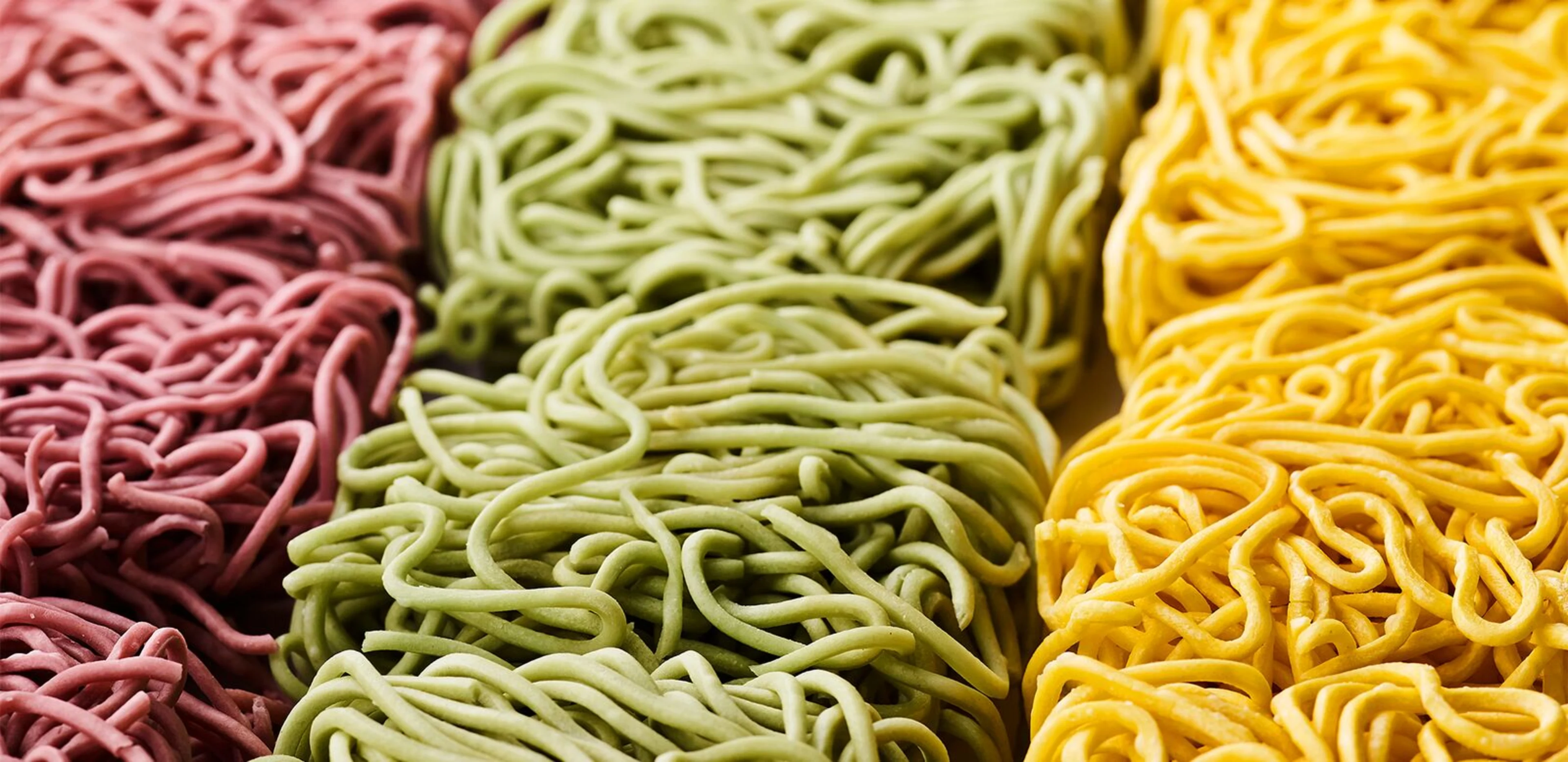
The recent launch of FruitMax® Yellow 1020 WSS shows how regional product development can answer this need. Developed for instant noodle manufacturers in Indonesia, Vietnam, Malaysia, the Philippines and Singapore, the turmeric-derived solution combines clean-label positioning with the heat and light stability needed for demanding noodle-processing conditions.
It is also Oterra’s first product developed and produced in the region, using turmeric from local growers and processing and blending capabilities in India. This matters because instant noodles are both a major regional category and an important export product. Color must deliver the familiar yellow appearance consumers expect while surviving production, cooking and shelf-life exposure.
Jagua Blue offers another example of innovation supporting international growth. Its approval by Codex Alimentarius as INS 183 covers 21 food categories. Many countries in Asia Pacific refer directly to Codex standards or allow them to prevail unless superseded by specific national regulations, expanding the relevance of the color across the region, subject to local requirements.
Color can reinforce function
The next frontier lies in the relationship between color and function. This does not mean positioning a color itself as a functional ingredient. Instead, color can reinforce the purpose, experience and expectations surrounding a functional product.
Oterra’s Color Trends 2026 research, based on 2,600 consumers in 13 countries, found strong connections between color, emotion and expected functional benefits. Seventy percent of surveyed consumers were very interested in benefits including immunity, heart health, digestion, mental well-being, sleep and healthy aging. The research also found associations between particular colors and expectations such as vitality, relaxation and heart health.
For manufacturers, the opportunity is to align product appearance with the wider product proposition. Color can help a beverage feel refreshing, reinforce the natural credentials of a better-for-you snack or signal the experience that a functional product has been designed to deliver.
Across Asia Pacific, authenticity, exports and function are coming together to give color a more strategic role. The brands that recognize this shift will not view color simply as decoration. They will use it to tell richer stories, navigate international opportunities and create products whose appearance supports their purpose.
"Across Asia Pacific, authenticity, exports and function are coming together to give color a more strategic role. The brands that recognize this shift will not view color simply as decoration."